Licensed Dental Assistant: What It Means, What It Requires, and How to Get There from Houma, LA
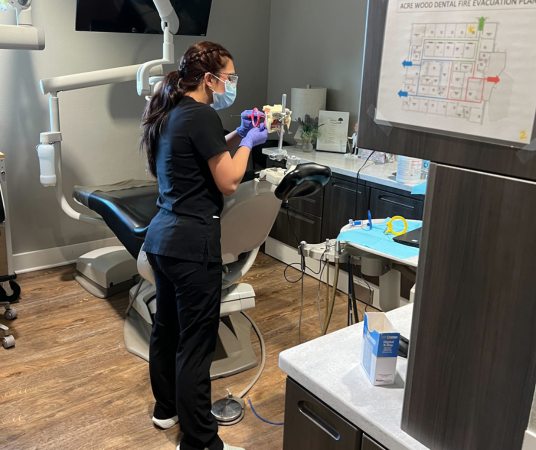
The term “licensed dental assistant” means different things in different states — and that confusion costs people time and money. Some states require dental assistants to hold a specific license or registration before performing clinical tasks. Others have no licensing requirement at all but strongly favor candidates with voluntary certification. A few have tiered systems with different credential levels allowing different scopes of practice.
Here’s how dental assistant licensing actually works, what credentials matter most, and how to navigate the requirements from Houma.
Licensed vs. Registered vs. Certified: What’s the Difference?
These terms get used interchangeably in casual conversation, but they have distinct legal meanings:
Licensed Dental Assistant (LDA): A credential issued by a state dental board that legally authorizes you to perform specific clinical tasks. Requirements and scope vary by state. Not all states use this designation.
Registered Dental Assistant (RDA): The most common credential. In some states, RDA is a state-issued registration required for clinical practice. In others, it’s a voluntary professional credential that improves hiring prospects and pay.
Certified Dental Assistant (CDA): A national credential issued by the Dental Assisting National Board (DANB). Recognized across all states and often satisfies state-level requirements.
Expanded Functions Dental Assistant (EFDA): An additional credential available in some states that authorizes dental assistants to perform advanced procedures — placing restorations, applying sealants, taking final impressions.
The specific requirements in your state are set by your state dental board — that’s the authoritative source. O*NET notes that dental assisting regulations vary significantly by jurisdiction, and checking your state’s dental practice act is an essential step before starting training.
What Licensing Typically Requires
While requirements vary, the general pathway to becoming a licensed or registered dental assistant includes:
1. Complete an Approved Training Program
Most states that require licensing mandate completion of a training program approved by the state dental board. This establishes your foundational clinical competency.
The program at Houma Dental Assistant School covers the clinical and administrative skills required across all states — 12 weeks of hands-on training in real dental offices, including:
- Chairside assisting and four-handed dentistry
- Dental radiography — technique, safety, and digital systems
- Sterilization and infection control — OSHA compliance
- Dental materials — mixing, handling, and application
- Patient communication and intake
- Administrative skills — scheduling, charting, insurance
2. Pass a Written Knowledge Exam
Most licensing pathways include a written exam covering:
- Dental anatomy and terminology
- Radiography technique and radiation safety
- Infection control and sterilization procedures
- Dental materials properties and handling
- Chairside assisting procedures
- Professional regulations and ethics
- Patient care and communication
The RDA exam (administered by individual state boards or DANB) is the most common pathway. Houma Dental Assistant School integrates RDA exam preparation throughout the entire 12-week curriculum.
3. Pass a Clinical Skills Exam (Where Required)
Some states require a practical exam demonstrating hands-on competency in addition to the written test. Tasks typically assessed include:
- Dental radiograph technique (positioning, exposure, processing)
- Infection control procedures (instrument processing, operatory disinfection)
- Patient positioning and chairside technique
- Dental materials mixing and handling
Training in real dental offices — rather than classroom labs — gives you a significant advantage on clinical exams because you’ve been practicing these skills in the actual environment where they’re tested.
4. Meet Additional Requirements
Depending on your state:
- CPR/BLS certification — required in virtually all states. The program at Houma Dental Assistant School includes BLS certification through the American Heart Association.
- Background check and fingerprinting — many state dental boards require criminal background screening.
- Application and fees — state board application fees typically range from $50–$200.
- Continuing education — most states require CE credits for credential renewal.
Why Licensing/Certification Matters for Your Career
Pay premium
Licensed and certified dental assistants earn approximately $2,000–$6,000/year more than non-credentialed peers. Over a five-year career, that’s $10,000–$30,000 in additional income.
Hiring advantage
Employers face less risk when hiring credentialed candidates. Your skills have been independently verified through a standardized process. This speeds up the hiring process and often results in better starting offers.
Legal authorization
In states that require licensing, you simply can’t perform certain clinical tasks without the credential. Radiography is the most common restriction — many states prohibit unlicensed dental assistants from taking X-rays.
Expanded scope
Earning your base credential opens the door to expanded functions certification in states that offer it. EFDA-certified dental assistants can perform procedures like placing restorations and applying sealants — skills that command $2–$5/hour more in pay.
Career mobility
Licensing and certification provide portable credentials. If you relocate, your verified skills follow you. While specific requirements may vary by state, having a recognized credential simplifies the transfer process.
O*NET Work Context for Licensed Dental Assistants
O*NET data shows that dental assistants work in an environment that demands:
- Accuracy and attention to detail — rated 4.7/5 in importance
- Concern for others — rated 4.5/5
- Dependability — rated 4.5/5
- Integrity — rated 4.5/5
- Cooperation — rated 4.4/5
These aren’t just personality traits — they’re the professional standards that licensing and certification verify through standardized assessment.
How to Check Your State’s Requirements
- Visit your state dental board website (search “[your state] dental board” or “[your state] board of dentistry”)
- Look for sections labeled “Dental Assistant Registration,” “Dental Assistant Licensing,” or “Credentialing”
- Review the specific requirements for your desired credential level
- Note application deadlines, fees, and required documentation
If you’re unsure about your state’s requirements, the team at Houma Dental Assistant School can help you understand what’s needed in your area.
WIOA Funding May Be Available
Training at Houma Dental Assistant School may qualify for WIOA (Workforce Innovation and Opportunity Act) funding. Eligible students can receive workforce-funded training through their local American Job Center. Visit CareerOneStop.org to check eligibility.
Get Started
- See the full curriculum: Program details
- Review tuition and payment options: Tuition
- Talk to our team: Contact us
- Apply today: How to apply
You're 12 weeks from the dental assistant career you deserve.